Monday, July 25, 2011

Harvest Monday July 25

This was a hectic week. Harvests happened, but not many pictures were taken. The most substantial product of the yard was this SUV on Sunday morning. You can read more about it in detail here. The story involves one parked SUV, one truck with a sleeping driver, and an innocent mailbox. No one was seriously injured (apparently not even the driver, though I imagine he'll be bruised).
One of the two container-grown potato plants got too hot/dry and died. I did salvage about half a pound of tiny new potatoes from it, though. I also picked 3 lb, 14 oz of squash and 2 and a half pounds of tomatoes. You can see those, at least, below, along with farmers market peaches, destined to become a sweet and spicy barbecue sauce.
That brings my totals to

2 lb 14 oz greens
60 lb oranges
13.5 oz kumquats
13 lb cherries
14.5 oz radish pods
8 oz peas
6 lb 12 oz tomatoes
10 lb 2 oz squash
14 oz garlic
4 lb 1 oz new potatoes
2 oz herbs
2.5 oz onions
1 lb 5 oz ornamental plums
16 lb cultivated plums
4 lb elderberries

Friday, July 22, 2011

Seeds: Making and Saving

I think seed saving is very important. For one thing, It's cheaper. The majority of money I have spent on this garden has been for seeds. (The next-highest expense was the $100 or so we used to put up the fence that separates the vegetable garden from the rest of the yard to keep the dogs out). Granted, I do prefer the interesting heirlooms from seed catalogs, which are more expensive, over the cheaper hybrids on the rack at my local hardware store. Now that I have these heirlooms, however, I can save the seed myself and have enough for myself and to share with others for years to come. There is a lot of good seedsaving information online and in books, but I'll share a quick example for saving tomato seed, since tomatoes are so popular with backyard gardeners.

First, needless to say, you have to have seed to save. That can be tricky. In short-season areas, it may be difficult to get mature seed before frost hits and kills the plants or rain comes and makes the drying seed mold. In hot climates, we have a different problem. High heat and pollen don't go together.

Obviously, some plant pollens like high heat more than others. Peppers and tomatoes have pollen that is viable at higher temperatures than, say, cabbages. But even hot-weather vegetables have their limits.

According to a gardening guide published by Colorado State, "Tomato pollination is temperature dependant. If nighttime temperatures drop below 55 degrees, pollen fails to develop and flowers that open the following morning will not set fruit....If the daytime temperature reaches 90 degrees by 10 a.m., blossoms that opened that morning abort."

When I was harvesting the first of my tomatoes, the ones I was so happy to find with few seeds, I didn't consider the temperatures. We'd been having temperatures veering wildly between periods of cold nights and days in the triple digits while those tomatoes were forming. This resulted in smaller tomatoes with few seeds. Now, our weather has settled to what I will tentatively call "normal" as you can see below.
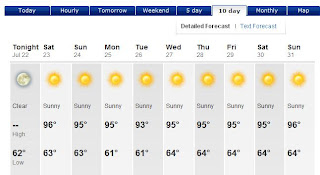

I am also getting larger and seedier tomatoes, as the flowers are being pollinated more thoroughly. It still seems to hot for beans, as I am seeing many bean flowers yet no bean pods. I am collecting more varieties of cowpeas, including the lovely and reliable yardlong bean, since Vigna unguiculata can flourish in higher temperatures than Phaseolus vulgaris. I will also be trying the drought and heat tolerant tepary bean, Phaseolus acutifolius, next year.
What can be done about it now? I notice that flowers are more likely to set fruits in denser plantings, where I assume the shade and humidity keep the temperatures down. So tighter plant spacing may help. Also, I think rigging up a light shade cover might help.

Anyway, here is how I save tomato seeds. I process seeds in a small batch because I don't need thousands of seeds for next year.

The good news is, tomato plants don't need any special treatment to produce seeds (radish plants, for instance, have to be kept in the ground much longer to allow them time to flower and set seed, and they need to be staked to keep them from falling over. They get big). Nor do you have to do anything special with the fruit. It's already ripe with mature seeds.

The bad news is, tomato seeds are covered in a substance that inhibits sprouting. The plant intends for the tomato to fall off and rot before the seeds sprout. For the most successful germination next season, we should mimic that process.

Start by scooping the seeds out of several ripe tomatoes, into a small container. I use a cup measure. You can use the remainder of the tomatoes for something else. Like salsa. Mmm. Anyway, add a little tap water to the slurry in the container. Just a bit. You want a soupy mixture. Now, you're going to let this mixture ferment to break down the germination inhibitors in the tomato gel around the seeds. Cover the container loosely (I stick mine in an unsealed plastic baggie) and make sure it's labeled with the variety you're saving. Set it someplace you won't forget it. You don't want to forget it.


After a couple of days, the mixture in the container will get moldy. It looks gross. This is why you don't want to forget it and find it next month.
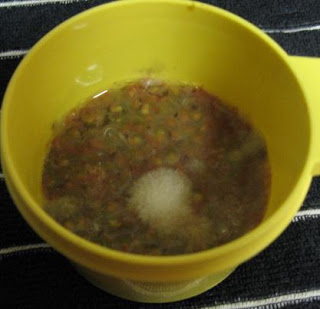
Now, add some more water to the container and swish it around a little. The scuzzy stuff will float, as will any nonviable seed. Mature seed will sink to the bottom. Pour off as much scuzz as you can. Then dump the rest into a fine-mesh strainer and rinse the seeds well under running water.

Then spread the cleaned seed out to dry. I like to use paper plates for this. Label the plate, too, so you don't get the seeds mixed up with some other variety (this may provide one more level of insurance against a significant other throwing the plate away). When the seeds are completely dry, they can be stored. If you're not sure whether they are dry enough, leave them out longer. Improperly dried seeds mold. A fully dried seed should snap if you bend it, but few tomatoes have seeds large enough to bend.


Congratulations, you've just saved yourself at least $2.50 on a pack of tomato seeds next year. More likely, you've saved several packs worth of seeds and now can share them with other gardening friends, exchange them for seeds you don't have on GardenWeb's seed exchange, or even sell them through organizations like Seed Saver's Exchange. Seeds vary in their longevity - onion seed is notoriously shortlived - but tomato seeds can last 5 years or more if you store them somewhere cool and dry. Now you'll never have to worry about your favorite tomato variety being bumped out of production by something trendier.

Don't laugh, it happens.

A note on hybrids: Most gardeners are aware that hybrid varieties don't "breed true" - the offspring will not be the same as the parent plant. Most books and articles add, "so hybrid seed is not worth saving." If you are the inquisitive sort, this is complete bunk. It is true that hybrid plants will not produce identical offspring (although seed companies have been known to label true-breeding, open pollinated seeds "hybrid" to discourage seedsaving and encourage customers to buy new seed every year), hybrid tomato plants will still produce tomato seeds. If you grow out the seeds next year, you will be greeted with several different types of tomatoes. You may like one of these new types better and you can develop your own new variety from that plant. Or one of the types might be very similar to the original tomatoes and you can develop your own open pollinated version of the hybrid tomato. For an excellent explanation of this type of plant breeding, see Carol Deppe's Breed Your Own Vegetable Varieties.

Monday, July 18, 2011

Harvest Monday July 18th

This was my best harvest week so far. The tomato plants and the squash vines are churning out a decent take almost daily. I have a lot of tomato plants this year because they managed to survive all the things that went wrong.

Below are the maroon tomatoes that are close to being my favorite variety this year (they tie with the funny bell pepper shaped ones). Unfortunately, neither variety reached me with a name. I will still save seeds.


I don't have a picture of the squash I harvested, but here is a simple dish I made with a couple. I sliced them into thin rounds and fried them in a little bit of butter and a sprinkle of seasoned salt. They were excellent. (The mystery object on the plate is a little onigiri, heated in the pan with a splash of soy sauce.) I had this for breakfast and call it Silver Dollar Squash.


Most of the tomatoes I picked got dried. I leave them rather juicy and store them in the freezer. They will be lovely memories of summer all winter. I want to try a bread dough with chopped dried tomatoes and rosemary. Mmm...


I also did some foraging. I stop by some unused land to gather forage for my rabbits. One place is along a chainlink fence that separates a sidewalk from a steep river bank. Wild grape grows over the fence, and the rabbits like that. Then I noticed that elderberry bushes also lean over the fence. I couldn't resist. I didn't gather enough for straight elderberry wine, but I will add these to a blend.
This is what they'll be blended with. These plums come from an apartment complex my family owns. Ideally, fruit for wine should be perfectly ripe. I am not the best ripe-plum picker, probably because I prefer to eat plums with a little crunch left to them (I know, it's practically sacrilegious). So if you make wine, don't follow my example: pick your fruit perfectly ripe. I also picked some little plums from my ornamental plum tree (one of those with dark purple leaves). It produces dark red plums about twice the size of a cherry with a wonderfully intense, tart-sweet taste. I would absolutely make a wine exclusively from them if I could ever gather enough.


My total for the week:

ornamental plums: 1 lb 5 oz
cultivated plums: 16 lbs
elderberries: 4 lb
tomatoes: 3 lb 3 oz
squash: 3 lb 4 oz


Which brings my total for the year to:

2 lb 14 oz greens
60 lb oranges
13.5 oz kumquats
13 lb cherries
14.5 oz radish pods
8 oz peas
4 lb 4 oz tomatoes
6 lb 4 oz squash
14 oz garlic
3 lb 4 oz new potatoes
2 oz herbs
2.5 oz onions
1 lb 5 oz ornamental plums
16 lb cultivated plums
4 lb elderberries

Sunday, July 10, 2011

Harvest Monday July 11th

This will be a summer of tomatoes. They were the only species not squished by falling grow lights, slurped by slugs, nibbled by bunnies, or attacked significantly by any of the other insect pests I had this year (notably stink bugs and aphids, which I treat by wishing I had chickens). I am hoping for a bumper crop eventually to can and dry. In the mean time, the main producers are two unnamed, smallish-fruited tomatoes that I will probably save seed from and grow next year. I've been grazing off of them for a couple weeks now. Mostly I just quarter or halve them and toss them in a skillet with whatever else I'm cooking.

I also make my family and coworkers eat them raw and report back. I am not a fan of plain, raw tomatoes. Yuck. But I'd like to know what's tasty for seedsaving or sharing.

I decided that the haul above (about 8 oz) qualified as enough to dry. They are in the dehydrator now. I love dried tomatoes. Most of them are the funny, bell-pepper shaped, cherry-size tomatoes that I got from a seed mix. They are very meaty little guys, with few seeds and little gel. That's great for me, since I love tomato sauces, salsas, and dried, all of which favor a dryish tomato. I will definitely save seed. The trouble is there are so few seeds inside. Still, I am determined and will name them and offer them next season.

(As an aside, I am willing to trade seed for any plant I list on this blog, so long as I am able to save them.)

Friday night I realized I didn't have anything to make for my box lunch Saturday. Unfortunately, I had cleaned out the ripe tomatoes in the afternoon and gave them away. I did have some chard and a young onion. I thinly sliced the stems and the onion and sauteed them with a couple of peppers we had left from our last farmers' market trip, as well as some pickled daikon and kohlrabi (also from the market), finished off with a little soy sauce. The greens were roughly chopped and stirred into some rice and quinoa along with the last of the sweet pickled kumquats from Mom's tree.


It was an odd meal. Swiss chard is not my favorite, although it's beautiful. I will grow it again (I have a lovely strain of purple-leaved chard that didn't get planted this year). I may try just eating it in soups and the like in winter, then feeding it to the bunnies over summer. I don't like it well enough for the light sautes of summer fare.


Finally a few more tomatoes and some 8-ball squash went into a pan with some sliced chicken breast and a splash of red wine vinegar. That's summer food at its best.


I do really love this squash. It doesn't seem to have the pithy texture that even young crookneck or zucchini have. Even at the size of a softball, this squash keeps a firm, smooth texture and the seeds are barely noticeable. The bad news is, it's a hybrid. I will try to keep some seeds in hopes of breaking it into an open pollinated variety, but it is growing in my front yard, where large squash tend to get stolen.


If I can't save seed, I may break down and buy it from a company. It's that good. Maybe someone's already dehybridized it in Seed Savers Exchange.


This week, I harvested:
14 oz tomatoes
1 lb 8 oz summer squash
5 oz chard
2 oz onions
3.5 oz garlic


which brings my totals for the year to:
2 lb 14 oz greens
60 lbs oranges (the wine is looking fabulous, by the way)
13.5 oz kumquats
13 lb cherries
14.5 oz radish pods
8 oz peas
1 lb 1 oz tomatoes
3 lb summer squash
14 oz garlic
3 lb 4 oz new potatoes
2 oz herbs
2.5 oz onions


Not bad for only my second year of gardening.

Monday, July 4, 2011

Rabbit Feeding


I don't feed my rabbits pellets. Rabbit pellets, like dog food, are fairly recent on the scene and animals have done fine without them for thousands of years previously. Also, rabbit pellets must be purchased.


Instead, I feed my rabbits good quality hay and assorted greens and vegetables. With ten rabbits instead of two, I find that my yard does not provide enough greens for the bunnies. In addition to what my own property supplies, I forage for them on empty land (caveat: to be entirely on the legal side of the fence, you have to have permission from the property owner to do this, even if you are technically removing invasive weeds).


In springtime, the pickings are easy. In the Central Valley, where we live, springtime runs from about November to March. It's been summer for a while, no matter what the calendar says. Plus, most landownders plow the land in late spring as the weeds start to dry out. Pickings now are slimmer.


Favorites at this time include wild grape as well as the weeds below.


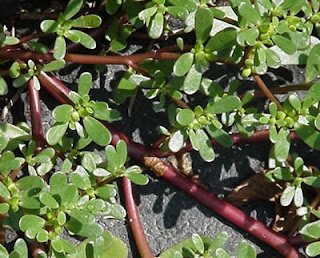
This is purslane. As a succulent, it contains a lot of water, which helps keep bunnies hydrated in hot weather. Also, people can eat it, though I haven't tried.


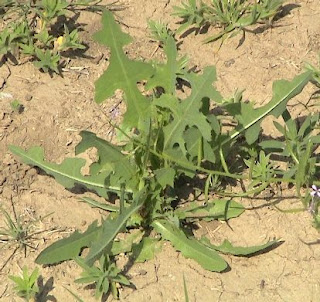
In the center of the photo above is sow thistle. It starts growing early in the year and is going to seed now. However, the plant stays green even while the seeds are ripe (unlike the trusty mustard family plants the rabbits were eating earlier in the year).


This is prickly lettuce, the forebears of our familiar salad green. They are also starting to go to seed at this time, though they will dry out as their seeds ripen. The bunnies especially seem to love the flower buds at the top of the stalk.


Chicory is a relative of the dandelion, familiar and also beloved of bunnies. I find chicory difficult to identify until it flowers. It has beautiful blue flowers, unlike anything else growing in this area right now. It will bloom through the summer, so I am looking forward to harvesting more of it for the bunnies. When it flowers, it sends up long, leafless stalks for the blooms, with the leaves as a clump at the bottom. Since the rabbits like the leaves best, I pull the whole clump.


These greens help augment what I feed the bunnies out of my own garden, like squash leaves, late radish leaves, dandelions, grasses and clover.

Harvest Monday July 4th


I have summer squash (Pool Ball Hybrid) and assorted tomatoes coming in now. I call them assorted because most are from a mix of seeds I received from Wintersown.org. I love the flavors of summer food. I sliced up the squash and tomatoes, as well as some chicken breast, sauteed it all with a little olive oil, white wine vinegar, salt and pepper. Divine.


Totals this week:


Summer squash: 1 lb 8 oz

Tomatoes: 3 oz.

Monday, June 13, 2011

Harvest Monday

A while back, there were some red and russet potatoes sprouting in my pantry. Usually, I throw such potatoes into my compost pile (where they grow happily in the summer). This time, I dug a pit in the back yard and planted them there. Other than earthing them up a couple times, I totally ignored them. This week, they were looking a little worse for the wear as the weather warmed up and the dogs kept barreling through them. So I checked to see if any had set tubers. Many looked like the plants below.

Perfect new potato size. The whole patch yielded 3 lbs, 4 oz of new potatoes, all washed up below. Some had such delicate skins that washing them stripped the skin right off.


I combined the potatoes with some garlic and herbs from the garden (more herbs and substantially less garlic than in this picture).


I had the roasted potatoes for dinner. Only the olive oil, salt, and pepper were produced off the property. How locavore is that?


In other news, my cayuga grape has two clusters of grapelets. None of the other vines set fruit this year.

And, although I don't have a picture of it yet, the cayuga's unkillable predecessor has actually put up leaves from its base. This was the plant I originally thought was dead, pulled up and tossed into the weeds where it languished for a couple of weeks, then realized that it might still be alive, and replanted in the backyard. It hung on there for a while, still green when I nicked the bark to check, but did not produce any leaf buds. Finally, I found the little branches were dried out and dead. Thankfully, before I could yank the poor thing out of the ground again, I noticed it was growing leaves at the very base of the trunk.


I love unkillable plants. They do well in my yard. I shall add cayuga grape to the list, which already includes Red Russian kale and potatoes.

Totals to date:


39 oz greens

60 lbs oranges (my sister's tree)

13.5 oz kumquats (my mother's tree)

13 lbs cherries (my neighbor's tree)

14.5 oz radish pods

8 oz peas (I'm sure I would have harvested more, but I started feeding the vines to my rabbits)

5.5 oz garlic
3 lbs 4 oz new potatoes

2 oz herbs

.5 oz tiny onion (its stem was broken by a wayward foot, so I went ahead and ate it)